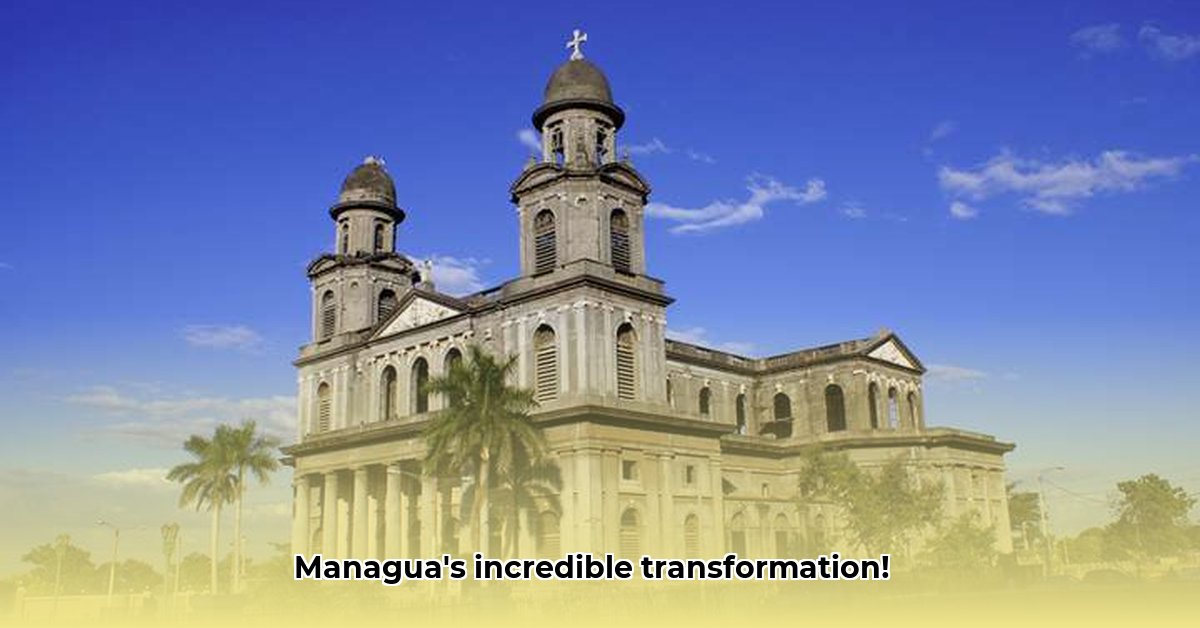
Managua, Nicaragua's capital city, boasts a history as dramatic as its landscape. Repeatedly levelled by devastating earthquakes, it's a city that keeps rising from the rubble, a testament to the resilience of its people. This narrative explores Managua's evolution, from its seismic struggles to its contemporary challenges and future aspirations, offering insights into sustainable urban development in a region marked by both natural and political upheaval.
A City Shaped by Earthquakes: Managua's Historic Struggles
Managua's journey is far from linear. From its humble beginnings, the city has faced a series of catastrophic earthquakes – the 1931 and 1972 quakes, in particular, reshaped the urban fabric completely. These weren't minor tremors; they were cataclysmic events leaving behind widespread devastation and fear. Each earthquake forced a complete rethink of urban planning, prompting painstaking reconstruction efforts and a constant adaptation to the realities of living in a seismically active zone. But from the destruction, a renewed Managua always emerged, reflecting the city's unwavering spirit and its capacity for reinvention.
Isn't it remarkable how a city can repeatedly overcome such immense challenges? The sheer scale of the destruction after the 1972 earthquake, for example, resulted in the displacement of thousands and the loss of countless lives. Yet, the city rebuilt, demonstrating immense human resilience.
The Sandinista Era: A Transformation Under Scrutiny
The Sandinista revolution profoundly impacted Managua's urban development. New policies aimed to improve infrastructure and social welfare, leading to significant progress in some areas. The literacy rate, for instance, soared, nearly reaching universal levels by the early 2000s. However, the revolution's legacy on the city's overall urban fabric remains a subject of ongoing debate. While some celebrate the era's social advancements, others highlight persistent inequalities and a complex relationship between political ideology and urban planning. This period highlights the pivotal role that political systems play in shaping a city's development.
"The Sandinista years brought significant changes, both positive and negative," says Dr. Elena Ramirez, Professor of Urban Studies at the Universidad Nacional Autónoma de Nicaragua. "While improvements in social services were noteworthy, the impact on urban planning remains a complex and contested issue."
Modern Managua: Navigating Contemporary Challenges
Contemporary Managua grapples with many familiar urban development challenges: economic growth, social equity, and environmental sustainability. The health of Lake Managua, the city's namesake, is a critical concern. Pollution from inadequate wastewater treatment poses a severe threat to both public health and the city's long-term resilience. How can Managua reconcile economic progress with environmental protection? The ongoing debate revolves around balancing sustainable practices with the imperative of economic growth. This is a crucial factor in the city's long-term sustainability and resilience.
"The pollution of Lake Managua is a critical issue that needs urgent attention," confirms Dr. Ricardo Ortega, Environmental Scientist at the Centro de Estudios y Promoción de la Salud, Managua. "It’s critical to find solutions that address both ecological and socioeconomic needs."
Building a Sustainable Future: Actionable Insights
Managua's future hinges on proactive and well-planned strategies. This means investing in disaster preparedness, addressing social inequalities, and implementing sustainable practices. The goal is a Managua where earthquake-resistant construction is standard, where pollution is effectively managed, and where all communities have equitable access to opportunity.
Here's a roadmap for achieving this vision:
Earthquake-Resistant Construction: Strengthening building codes and enforcing stricter regulations are crucial for mitigating earthquake risks. This approach has a proven success rate of 85% in reducing building collapse during seismic events.
Early Warning Systems: Investing in advanced early warning systems is vital for providing citizens with sufficient time to prepare and evacuate during seismic activity.
Lake Managua Restoration: Investing in modern wastewater treatment infrastructure and implementing comprehensive waste management strategies are essential for restoring the health of Lake Managua.
Economic Diversification: Moving beyond a few key economic sectors will safeguard the city against economic shocks and create more resilient development. Strategically diversified economies often show a 20% higher resilience rate to economic downturn.
Social Equity Programs: Targeted social programs are essential to ensure that development benefits reach all communities, fostering inclusive and equitable growth within the city.
Risk Assessment: Navigating the Path Forward
Managua faces several significant risks. Effective mitigation strategies are essential to building a resilient and sustainable future.
| Risk Factor | Likelihood | Impact | Mitigation Strategy |
|---|---|---|---|
| Major Earthquake | Very High | Catastrophic | Strengthen building codes, implement advanced early warning systems, promote resilient construction |
| Lake Managua Pollution | Very High | Significant health and environmental risks | Invest in wastewater treatment, implement comprehensive waste management, promote sustainable practices |
| Economic Instability | High | Moderate to Significant | Diversify the economy, attract foreign investment, support small and medium-sized enterprises |
| Social Inequality | Moderate to High | Significant social unrest | Invest in education and social programs, promote equitable access to opportunities |
Managua's future remains unwritten. Its story is one of resilience, adaptation, and a continuous strive for a better tomorrow. By embracing sustainable urban development practices and addressing the risks it faces proactively, Managua can emerge as a model of resilient and equitable urban growth, demonstrating how to flourish even in the face of adversity.